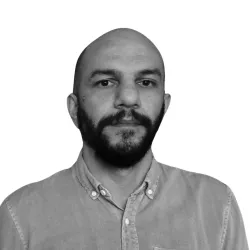
Osama Diab

A researcher specializing in development and economic rights, with a focus on the human rights and environmental impacts of fiscal, monetary, and international trade policies in the Global South, particularly West Asia and North Africa.

Currently, serving as a Postdoctoral Research Associate in the Arabic Studies and East Asian Department at KU Leuven. I hold a PhD in Conflict and Development Studies from Ghent University (2019).

Latest stories

Cotton Specters| Depleting the earth and its children

Urban & Economy_

Long before technical fixes, Egypt’s cotton boom broke natural nutrient cycles, plunging fields into disease and forcing decades of grueling hand labor on rural children.

Osama Diab_

Cotton Specters| Depleting the earth and its children

Cotton Specters| Agriculture and the making of Egyptian dependency

Urban & Economy_

Integrating into global value chains extracted billions of labor-hours and cubic meters of water from Egypt, cementing a deep, historic pattern of structural unequal exchange.

Osama Diab_

Cotton Specters| Agriculture and the making of Egyptian dependency

The High Cost of Low Prices| Egypt’s agricultural exports

Urban & Economy_

Egypt’s booming farm exports mask hidden costs—massive water loss, underpaid labor, and cheap prices shaped by global competition and currency devaluation.

Osama Diab_

The High Cost of Low Prices| Egypt’s agricultural exports

The High Cost of Low Prices| What do we exchange when we trade?

Urban & Economy_

Unequal trade burdens poorer countries with heavy environmental and labor costs while yielding little value, but collective strategies could shift global pricing power.

Osama Diab_

The High Cost of Low Prices| What do we exchange when we trade?

Corruption as leverage: How institutional weakness fuels neoliberalism

Urban & Economy_

Institutional weakness isn't a flaw in the neoliberal system—it's a feature. This analysis reveals how lax regulations and the informal economy create a "comparative advantage."

Osama Diab_

Corruption as leverage: How institutional weakness fuels neoliberalism