
Gen Z & the Revolution| Speak, and be seen
January 25 in the eyes of those paying the price for choices they did not make

By the simplest reckoning, fifteen years after the January Revolution, those who followed its unfolding from balconies or television screens—and those who were still infants, learning their first steps and words—are no longer merely onlookers.
Those who did not choose the path of revolution, and therefore did not take part in it—those born between 1997 and 2010, commonly referred to as Gen Z—may remember the revolution and the curfews mainly as a time that deprived them of outings and play. Time has since turned. Today, they are the same age as those who, in 2011, stood face to face with a formidable security apparatus and succeeded in toppling the head of the regime.
But this is not the same day, and they are not meeting it on the same ground.
The revolution that hovered over their childhood left its imprint on their adolescence and early adulthood. And when they stepped into the streets two years ago, declaring their solidarity with Palestine, they were not met as earlier generations had been, a quarter of a century before, when they rallied for the Palestinian Intifada. Instead, the streets led them to prison doors.
What was once possible for the January revolutionaries is no longer within reach. The revolution they mark each year with pride was never without cost. Part of its reckoning was the closing down of spaces that had briefly opened, and the firm prohibition of opening any new ones. Power has grown acutely sensitive, wary of even the smallest spark.
The cost has not been limited to political freedoms. It has extended into social and economic conditions, and even into culture itself. Life has grown harsher, and emigration has become a collective dream.
Today, we stand before a generation made to pay the bill without ever tasting the euphoria that touched us in 2011—a generation that received no apologies, no salute after a victory; a generation that neither made a decision nor chose a path.
Perhaps justice—one of the foremost slogans of January—demands that we listen to those who are paying the price for choices they did not make.
This is not simply a matter of due acknowledgement. It is essential if we are to imagine a future at all.
Whatever the circumstances, and whatever the nature of the power in control, stasis is an illusion.
This is the most important lesson of January. Any change—or even any attempt at change—in the near or medium term, by whatever means and along whatever path, will place this generation at the forefront of its scene.
On the fifteenth anniversary of the revolution, after listening to one another for a long time and taking turns indulging in nostalgia, we chose to listen to the future.
In this series, some call on us to speak and to engage in self-review; others ask us to step aside. Some question what we did, while others share with us their feelings, their experiences, and their vision of what lies ahead.
In this series, Gen Z speaks—so that we may see them.
Because the conversation must go on.
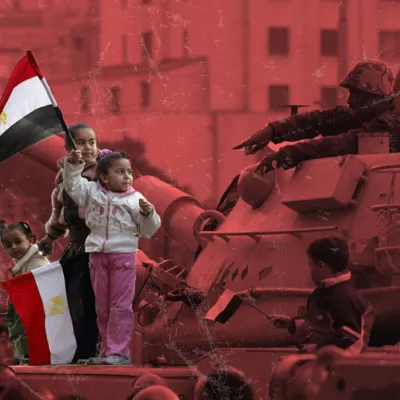
Gen Z & the Revolution| It is time for the January generation to step aside
If we possess a theory or a lesson from January’s lost lessons, perhaps we can direct the raging flood toward those who deserve it, without devouring everything in our path.
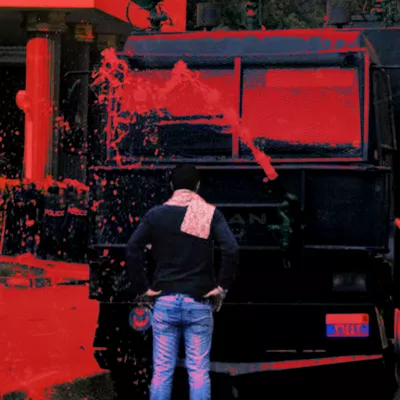
Gen Z & the Revolution| Realism, after the rush
One of the most important effects of the January Revolution on my generation is that it shaped a restrained, cautious political awareness. We do not trust revolutionary rhetoric
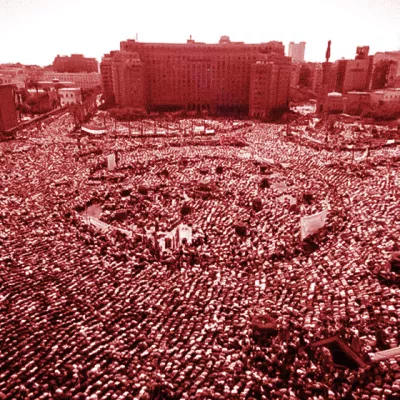
Gen Z & the Revolution| The children of open wounds
A personal reflection on growing up in the aftermath of Egypt’s revolution. Inherited defeat, enforced silence, and a wound passed down to a generation too young to choose it.
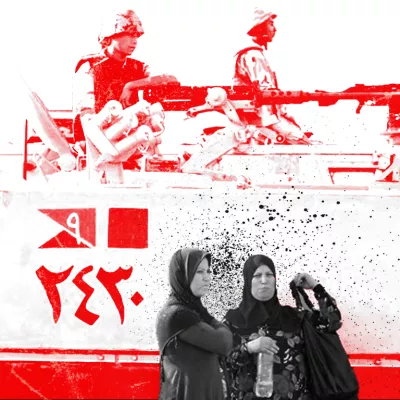
Gen Z & the Revolution| Egypt's last supper
Was the revolution assassinated or did it succumb to its own internal friction? A dive into the generation gap, historical falsification, and the struggle for a new narrative.
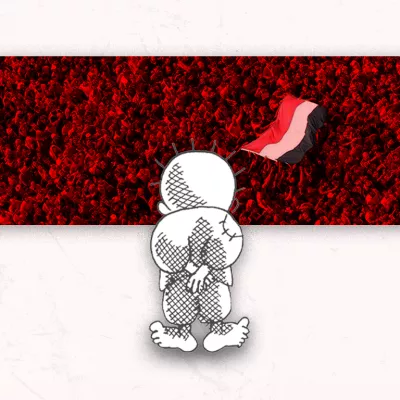
Gen Z & the Revolution| Raised by the elephant in the room
Raised in the shadow of January 25, I learned politics through fragments: photographs, fear, and unanswered questions about what happens after victory.
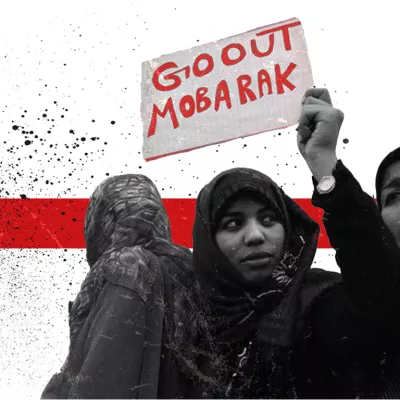
Gen Z & the Revolution| The flood on the horizon
The January revolution’s “failure” wasn’t preordained, but it was certainly shaped by a limited, if understandable, political imagination.
Gen Z & the Revolution| A generation taken off the will
Can a revolution that isn't passed down still be called a revolution? Seif El-Din Ahmed reproaches the "wounded" generation for locking the door to history on their children.
Gen Z & the Revolution| The nettles swaddled between the revolution’s leaves
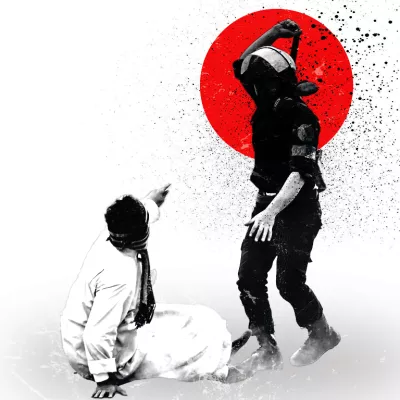
I was 10 when Tahrir lit up my world with heroes. Now, at the square's sanitized corpse, I'm just a fragment of their failed dream—watching my generation turn nettles into memes.
Gen Z & the Revolution| Not all battles were public
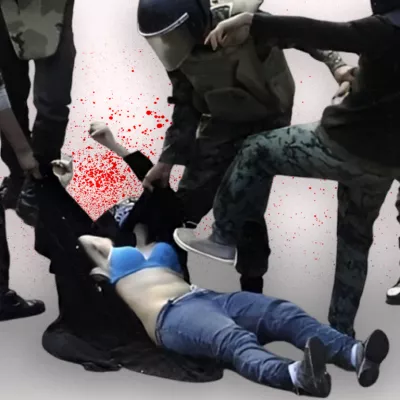
Too young for politics, but too old for innocence: Wafaa Khairy reflects on growing up in Upper Egypt and why the "real" revolution must start in the home, not just the street.
Gen Z & the Revolution| Lessons from the road to Palestine
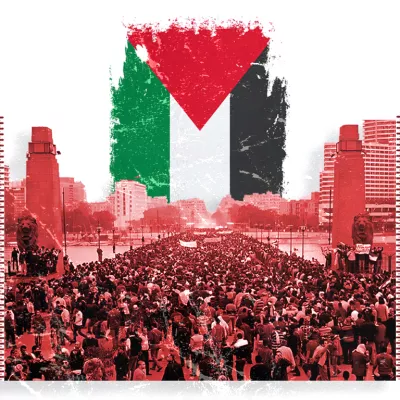
My first relationship with politics passed through my mother’s body. She is Palestinian, living in exile in Egypt, cut off from her land and her family.

Gen Z & the Revolution| Reckoning with the rot
Growing up in the womb of the counterrevolution, I watched the burial of January. But revolutions don't succeed overnight; they pave the way for a longer experiment.

Gen Z & the Revolution| Why I chose the state
Why do I support the current regime’s stance toward January? Because I prefer a half-state to no state at all. I prefer a clear, even difficult trajectory.
Gen Z & the Revolution| American echoes, Egyptian wails
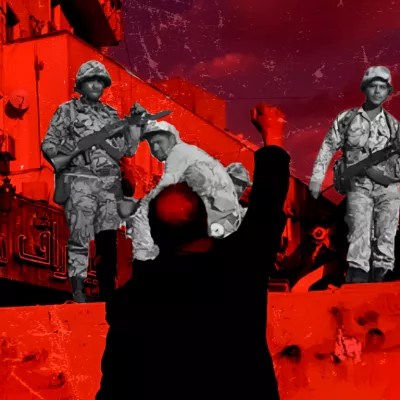
We live in the same shack of repression, sparring like roosters and celebrating hollow victories. Hatred is a luxury we cannot afford when everyone’s life is precarious.